
Hi everyone! I’m the site manager at GOOD-KNIFE, working with our engineers to share practical guides on heavy-duty blades, shredder knives, and custom moulds.

What Are You Looking For?
Request a Quote

Hi everyone! I’m the site manager at GOOD-KNIFE, working with our engineers to share practical guides on heavy-duty blades, shredder knives, and custom moulds.
In heavy-duty manufacturing and recycling industries, industrial blades and moulds are the unsung heroes. Whether your equipment is shearing tons of steel scrap, tearing through solid waste, or pressing metal chips into dense briquettes, these components operate under extreme conditions—facing relentless hydraulic pressure, severe abrasive friction, and high-frequency impacts.
For procurement managers and plant engineers, a common headache is frequent downtime. If a blade chips or a mould deforms prematurely, the production line halts, and profits vanish.
So, how do you select the right industrial blades and moulds to maximize service life and reduce cost-per-ton? It all comes down to mastering the balance between Hardness and Toughness.
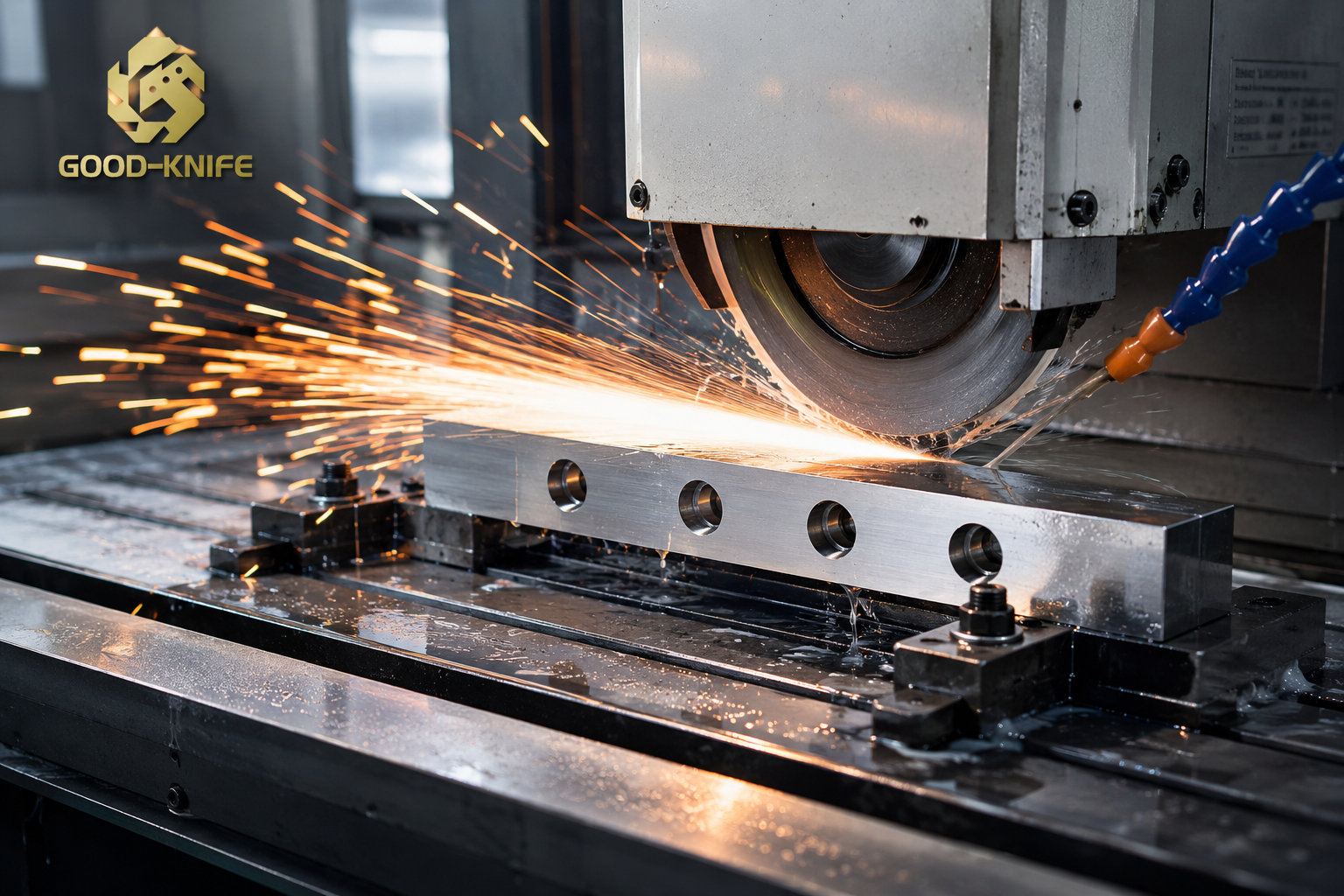
When it comes to tooling steel, you can rarely have maximum hardness and maximum toughness at the same time.
Choosing the wrong material or improper heat treatment results in two common failure modes:
Failure A: Chipping/Breaking. The tool is too hard and brittle. Under high impact, the cutting edge cracks.
Failure B: Rapid Wearing/Deformation. The tool is too soft. The cutting edge blunts quickly, or the mould cavity deforms, causing material jamming and burrs.
To solve this, a premium manufacturer must select the specific alloy grade and heat treatment process tailored to the exact machinery and material handled. Here is a breakdown of how we engineer our core product lines:
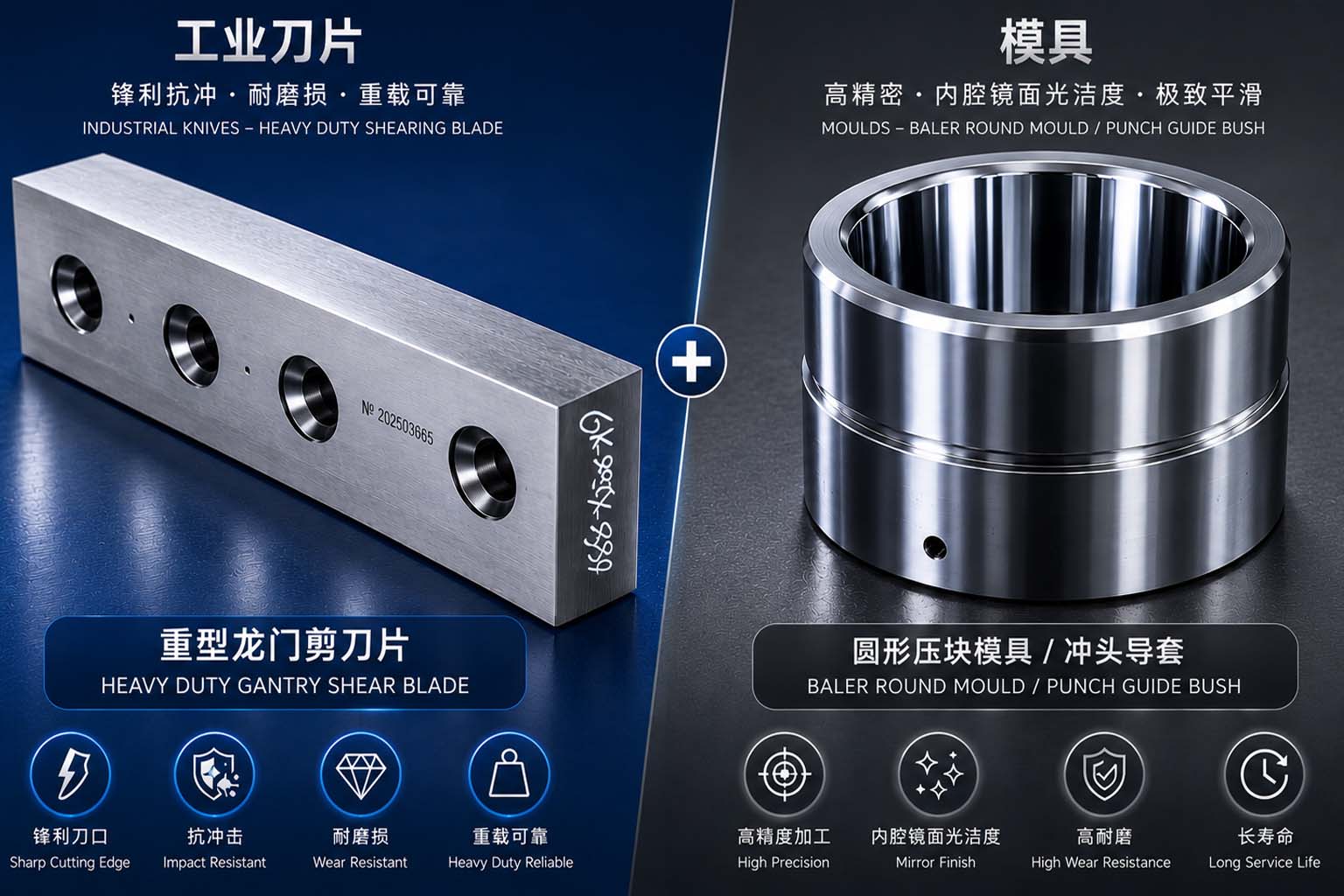
An excellent material is only half the battle. Precision engineering dictates whether a blade or mould will perform safely on your machine.
A variation of just a few microns in thickness, flatness, or bolt-hole alignment can lead to catastrophic consequences. If a Hydraulic Guillotine Shear Blade has a slight straightness deviation, the blade gap will be inconsistent, causing severe burrs on your metal sheets or, worse, causing the upper and lower blades to crash.
That is why all our blades and moulds undergo rigorous CNC precision grinding and 100% inspection to guarantee an OEM-quality fit, straight out of the box.
At our facility, we don't just sell standard products—we deliver custom engineering solutions. Whether you need an indexable 4-sided blade replacement for a Lindemann shear, a custom-diameter Baler Round Mould, or an upgrade in blade material to handle tougher alloys, our technical team is ready to support you.
Do you have a technical drawing or a specific wear issue you want to solve?
Send us your blade drawing, machine model, and a brief description of the wear problem. Our engineering team will review your application and recommend the right blade material, hardness window, and heat treatment process — then follow up with a free consultation and quotation.
Leave A Message
Home
products
contact